Most ESPs don’t know what they sent
Where "hello {user_name}" issues come from and what you can do about it
Author: Dave Cline
Posted: 6/30/2023
Hello again!👋
Today I’m going to talk about how most email service providers (ESPs) basically just guess what they’re going to send to your users, and how that can make analyzing your campaigns nearly impossible.
As you may have guessed, Swift Missive saves an exact copy of your emails as they are sent to your contacts, eliminating any guesswork and giving you a clear idea of what your contacts received.
What most ESPs say they’ll send
Most email service providers like to give you a brief preview of what your rendered templates will look like when they’re sent. They go ahead and fill out any template variables with computer-generated data that gives the best picture of what your contacts will receive. I’d say this makes a lot of sense and is a good way to give a preview.

"All your emails will render this well! Trust us!!" -- Most email service providers
But when ESPs show you "what you’ll send," they are often also making some incorrect assumptions about what they’ll know about your contacts in the future. Sure, they might have data for Sally and John when they fire off your email campaigns, but what about Karen? Karen might get the "hello {user_name}" treatment described in the next section! Sorry, Karen.
What your contacts might actually be seeing
Here is the kind of email your contacts will see if your ESP doesn’t have the data it needs when it goes to send your emails.
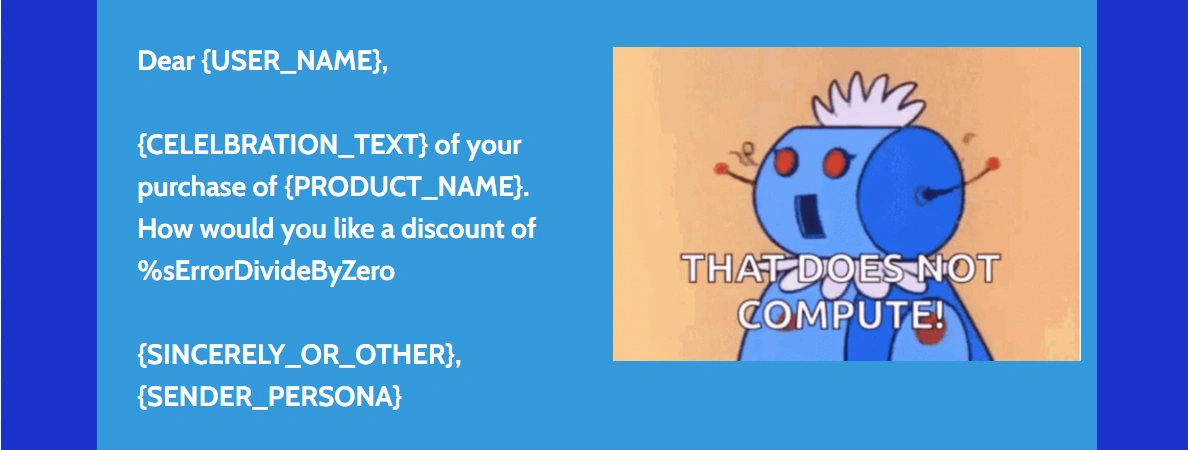
How your email template may have actually rendered
Note how the variables {user_name} and so-on were left as variables and not replaced with values like "Karen" and "Hurray!" Template misrendering like this can happen when your contacts’ data can’t reach your templates at rendering time, because the data is stuck in a data traffic-jam. Here is what that looks like behind the scenes at ESPs:
Personalized emails — when they work correctly — generate 29% higher open rates and 41% higher click-through rates, according to Campaign Monitor. That’s exactly why getting the rendering right matters so much.
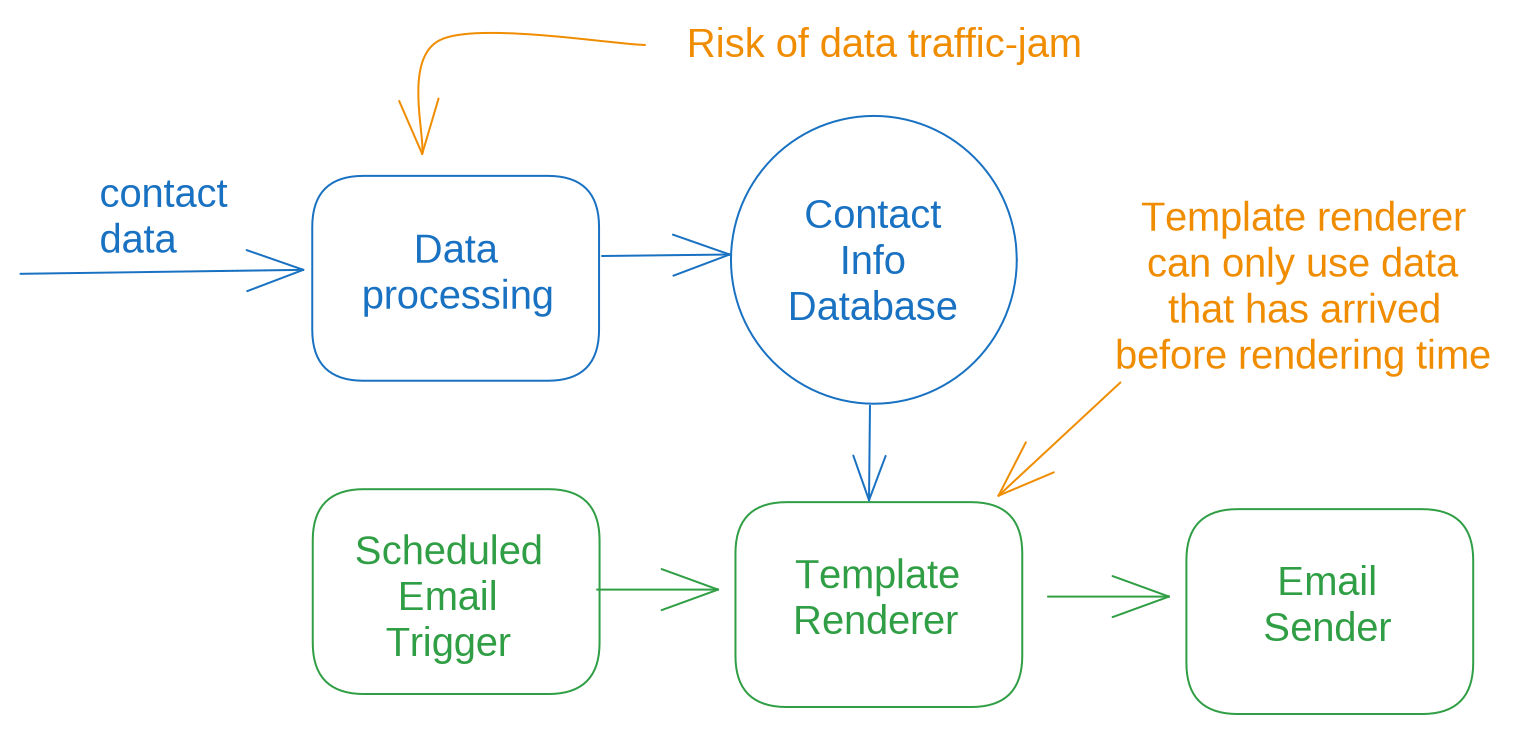
A basic overview of contact data stream feeding into the email stream
To illustrate what this diagram is showing, let’s imagine that there’s a data traffic-jam from noon until 2pm, and an email blast is triggered at 1pm. You contacts’ data will be trying to reach the template renderer to be part of the email blast, but it won’t be able to get there because it’s stuck in the traffic-jam. As a result, the template renderer is not going to have the data it needs to render your email templates correctly and your contacts might receive garbled emails.
The problem I have with most ESPs isn’t so much that they suffer from data traffic-jams. It’s that they pretend they don’t. Without the ability to know what your contacts actually saw, you’ll never know whether your email campaigns are under-performing because of data issues or some other issues. You shouldn’t have to guess!
How Swift Missive helps avoids guesswork
We have some experienced professionals over here who knew from the start that the email world was full of misleading claims about what delivered emails looked like. And we knew figuring out why a campaign didn’t deliver can be extremely frustrating (or even impossible) when your email service provider isn’t giving your straight answers about what your contacts received. We wanted your job to be easier, so we designed our system to show you the actual email you sent instead.
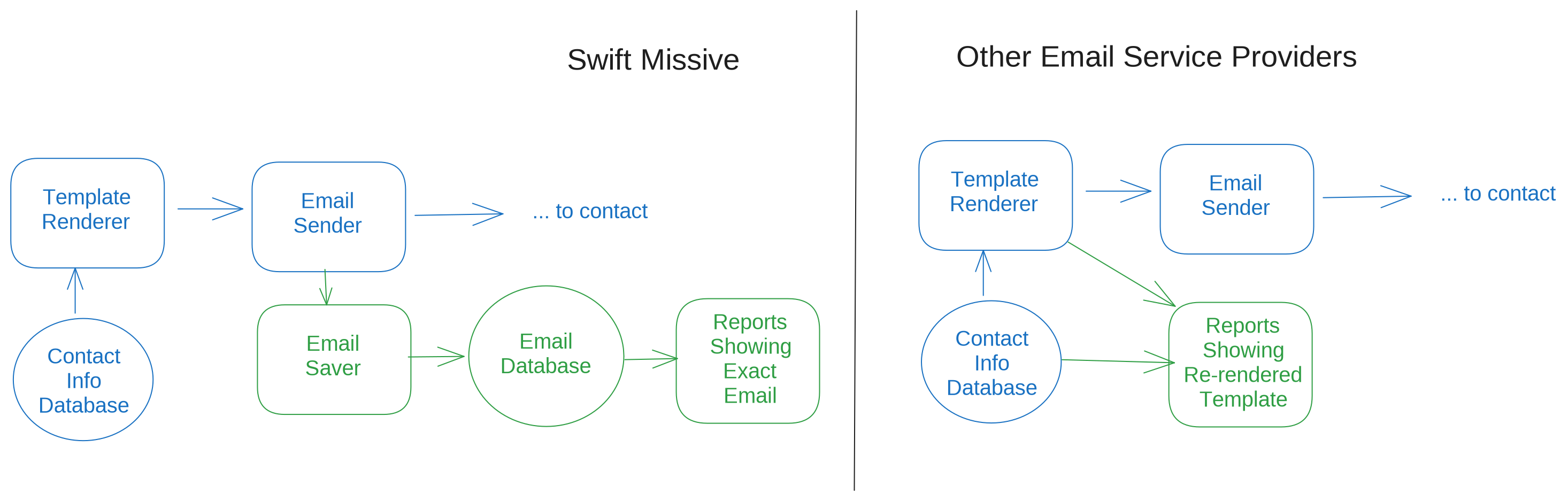
Swift Missive makes a copy of each email that is sent and can show it to you
We’re not going to pretend we have infinitely fast systems over here at Swift Missive. We don’t have quantum computers or processors the size of buildings. So it’s possible that even our system will experience data traffic-jams sometimes. But what we can guarantee is that if we do have issues rendering your templates because of data traffic-jams or any other problems, we will tell you about it instead of just pretending we sent a perfectly rendered template.
We hope that by offering this additional transparency it will be easier for you, our beloved customers, to figure out what is going on with campaigns that are under-performing, and to adjust your workflows to avoid such problems in the future. Note that you are less likely to experience issues like this if you use Swift Missive instead of other email service providers, we are just saying you are much more likely to actually know if you are being affected than you would be anywhere else.
What to do about data traffic-jams
We suggest these simple steps to avoid sending mangled emails, no matter what email service provider you are using:
- Understand the problems that can arise (e.g. data traffic-jams)
- Observe your sends to see if you are affected
- Adjust your workflows as needed
By reading this blog post you’ve already completed the first step! Hurray!
And fortunately for you (if you are already using Swift Missive anyways), step two is even easier. Just log into your account and check out the recent-sends report in the insights tab. If you are using another ESP, I’m afraid this is where I can’t help you. In fact, even your ESP probably can’t help you because they usually don’t keep a copy of the emails they send.
Once you view some of your recent sends, you should be able to tell if your template variables are being rendered correctly. If you see some ugly template variables like the mangled email above, that’s also what your contact saw! Most likely this means you are sending your ESP a lot of contact data and then are firing off an email blast very shortly afterwards. If this is the case, try waiting a few hours in between the data upload and the email blast and see if you get better results. The more contact data you upload, the longer you should wait before the email blast.
We hope this helps!
It’s actually somewhat of a faux pas for us to reveal this type of information to our customers. Other ESPs tend to hide this kind of thing, thinking it benefits them to pretend their systems will work perfectly no matter what happens. And honestly they might be right about it benefiting them-- not a lot of people really care to dig into the inner workings of their email platforms. And by pretending they don’t have these problems, other ESPs don’t have to figure out ways to help avoid it, or to try to explain complex problems to their customers.
But we strive to take a better approach. We want our system to be as perfect as possible but we won’t lie to you in order to make it appear that way. Instead what we’ll do is offer transparency about potential issues and empower you to make decisions based on facts. Only then can you work out any issues and make your future campaigns more effective. We hope this helps!